Blog

Government figure acknowledges danger of the Vaccine

U.S. Centers for Disease Control and Prevention (CDC) officials are aware of reports of long-lasting problems following COVID-19 vaccination, an official recently disclosed.

“With respect to reports of people experiencing debilitating illnesses, we are aware of these reports of people experiencing long-lasting health problems following COVID vaccination,” Dr. Tom Shimabukuro, director of the CDC’s Immunization Safety Office, said on Jan. 26.

https://www.theepochtimes.com/health/cdc-aware-of-reports-of-debilitating-illnesses-after-covid-19-vaccination-official_5020135.html?utm_source=share-btn-copylink

New horizons for surrogacy: ‘whole body gestational donation’ – BioEdge

New horizons for surrogacy: ‘whole body gestational donation’ – BioEdge
— Read on bioedge.org/beginning-of-life-issues/surrogacy/new-horizons-for-surrogacy-whole-body-gestational-donation/

From the article: “In the journal Theoretical Medicine and Bioethics, Anna Smajdor, of the University of Olso, in Norway, develops her insight. She argues that these women could be put to good use as gestational surrogates provided that they have made an advance directive. She calls this “whole body gestational donation” (WBGD). We know that “brain-dead” women can carry pregnancies to term; why shouldn’t pregnancies be initiated to help childless couples?”

The Catechism of the Catholic Church teaches, “Techniques that entail the dissociation of husband and wife, by the intrusion of a person other than the couple (donation of sperm or ovum, surrogate uterus), are gravely immoral. These techniques (heterologous artificial insemination and fertilization) infringe the child’s right to be born of a father and mother known to him and bound to each other by marriage. They betray the spouses’ ‘right to become a father and a mother only through each other’” (CCC 2376). 

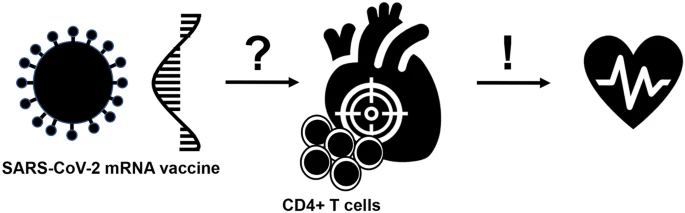
Autopsy-based histopathological characterization of myocarditis after anti-SARS-CoV-2-vaccination

Graphical Abstract

Schwab, C., Domke, L.M., Hartmann, L. et al. Autopsy-based histopathological characterization of myocarditis after anti-SARS-CoV-2-vaccination. Clin Res Cardiol (2022). https://link.springer.com/article/10.1007/s00392-022-02129-5#citeas

My observations: In making medical-moral decisions about healthcare, the patient is entitled to know and freely assess the risks and benefits of the vaccine to himself/herself and to those over whom they have care. This is a complex issue and a person might make a moral decision to take the vaccine. No one has a moral obligation to be vaccinated. It is prudent to consider the benefits and risks. The strongest statement from the Holy See regarding the need for vaccination indicated that it should be considered for the protection of others. It is now known that the vaccine does not prevent transmission of the virus. Under the current circumstances, it would be prudent to make sure one is consulting with medical professionals who are well-read in this area and are willing to discuss forthrightly the risks associated with the vaccine in particular circumstances.

COVID 19 Vaccine Risks

This link below leads to an interview by Dr. Drew Pinsky of Pathologist Dr. Ryan Cole. Dr. Cole discusses what he and other pathologists have seen in vaccinated patients. According to Catholic bioethical teaching, “One cannot impose on anyone the obligation to have recourse to a technique which… carries a risk or is burdensome…” Declaration on Euthanasia (Vatican, CDF, 1980).

I ran across a German article in cardiology on a study of port-mortems on cause of death after vaccination. I will try to post something on that as soon as I can find the article. These things tend to pop up and then get censored by media. But I will find it.

Dr. Ryan Cole Interview

Pius XII Had It Right

Recently, in the Diocese of Lake Charles, we celebrated the White Mass for Medical Professionals. It is called the White Mass because of a physician’s white coat. In the diocese we have formed a Catholic Medical Guild and are applying for guild membership with the Catholic Medical Association. I have been asked to serve as the charter chaplain of the guild. My work in the field of bioethics is one of the reasons, I suppose. Another is the fact that I am already a member of the Catholic Medical Association. I was asked to preach at the White Mass and in my preparation I had the opportunity to reflect on some of the basic principles of Catholic medical morality.

The homily was based primarily on the Gospel for that week, the 30th Week in Ordinary Time. The Gospel came from Luke 18:9-14, describing the contrast between the Pharisee who speaks of his own righteousness and the tax collector who is humble and asks for God’s mercy. This gave me the opportunity to speak about the great blessing of Catholic health care.

Tax collectors, as portrayed in the Gospel, were regarded as sinners. But the Gospels do something interesting here. The Lord grants saving grace to tax collectors. Those tax collectors rise up to become harbingers of the mercy of God. Those mentioned in the Gospel were disposed to repentance when confronted with the truth. The Apostle Matthew, Zaccheus, and the unnamed figure in our Gospel today are the clearest examples. It is on account of Matthew’s invitation to dinner that we hear the Lord’s insight into the human need physical and spiritual healing.  “While Jesus was having dinner at Matthew’s house, many tax collectors and sinners came and ate with him and his disciples. When the Pharisees saw this, they asked his disciples, ‘Why does your teacher eat with tax collectors and sinners?’ On hearing this, Jesus said, “’It is not the healthy who need a doctor, but the sick. But go and learn what this means: ‘I desire mercy, not sacrifice.’” (See Matt. 9:9-13)

The key to preservation of mercy in the new dispensation is the priority of the dignity of the human person, male and female, made in the image and likeness of God. Showing mercy and the respect for individual human dignity are inseparable. These concepts were elegantly restated numerous times by the Supreme Pontiffs beginning in the late 19th century, particularly in the pontificates of Popes Pius XI, Pius XII, and Pope St. John Paul II. The Progressivism of the late 19th and early 20th Centuries, which led to the eugenics movement with very harmful results, here and abroad, were rebutted by the Popes appealing to the sacred truths of creation and redemption demonstrating the dignity of the human person. The essential characteristic of this teaching was that the community was made for man, not man for the community!

For Centuries, Catholic health care has succeeded in maintaining the proper balance in justice which holds to the priority of persons over things. A priority of the dignity of the individual person over any artifice which would turn human persons into subjects subordinate to the social whole. The pressure is particularly acute in these days to disregard the just aspirations of Catholic administrators, physicians and other professionals, and their patients, summed up in the all-important physician-patient relationship. While it is possible by an abuse of the capacity for freedom to succeed in moving persons to second place behind oxen in pits, or temple treasuries, or corporate profits, or government interests, in Christ’s new creation the common good cannot exist without the priority of persons over things.

In a famous 1952 address to the Medical Community, Pope Pius XII clarified the order of interests among the field of scientific research, the good of the community, and the rights of patients. He stated

“Science is a great good, an excellent value that cannot be despised and whose promotion is a morally noble act. Yet it does not represent the highest value to which all other values must be subject.”

“The patient’s personal right to physical and spiritual life in keeping with his human integrity, as well as retaining confidence in his own doctor, are values that exceed the interests of science. These values might appear banal in relation to scientific breakthroughs, yet medicine cannot exist without them.” Gonzalo Herranz Rodriguez, (1952 Address by Pope Pius XII to the Medical Community https://www.ewtn.com/catholicism/library/1952-adress-by-pope-pius-xii-to-the-medical-community-2631, October 22, 2022.)

He states, “the community is the great means intended by nature and God to regulate the exchange of mutual needs and to aid each man to develop his personality fully according to his individual and social abilities”, and that the common good, public health and social well-being are most important values.

However, the good of human persons cannot be sacrificed for these goods. There is an intangible individual sacredness of far greater value than the medical interests of the community. (See, Rodriguez) “It must be noted that, in his personal being, man is not finally ordered to the usefulness of society. On the contrary, the community exists for man.” (Pius XII, Address)

This is the revelatory logic of the lesson spoken in Mercy to the Pharisees: “The Sabbath was made for man, not man for the Sabbath.” (Mark 2:27)

This priority of persons over the goods that Pius XII referred to as the common good, public health and social well-being is important and when this order is violated, grotesque injustices are produced.

It seems as though we have begun to witness this with the mRNA vaccines. We are still trying to catch up to the reality of injuries and deaths from the vaccines. I have seen quite a bit of evidence from various scientific and governmental sources indicating that the vaccines can cause injury (and that is not to say that they cannot ever be used morally). In Catholic bioethics, this is why we require informed consent and hold that one cannot be required to take a vaccine, or any prophylactic or curative treatment for that matter, as a general rule. The primary reason that many prominent people in the Church exhorted and even required submission to the vaccine was the claim that it would protect others. Now we know that the vaccines never did afford protection from transmission of the virus. To the extent that the claim for the protection of others was employed to mitigate against a person’s prudential judgment in refusing the vaccine, the official argument for the vaccine was empty and baseless. Sadly, this lapse in moral judgment also caused injuries. In itself it was always contrary to the good of the person and therefore against Catholic moral principles.

End of Life Decisions

Health Care Decisions and the End of Life

A Brief Guide

By Fr. Edward J. Richard, MS

Decisions affecting treatment and care at the end of a person’s life can present extraordinary difficulties for those involved.  The public recognition of issues about treatment and care at the end of life has made almost everyone aware, if not fearful, of the possibility of becoming dependent upon other people and technological help to sustain one’s life when a life threatening condition befalls oneself or a loved one.  The impending sense of loss can become entwined with other emotions surrounding serious questions about appropriate care of the seriously ill or dying person.  Since many families do not discuss these matters beforehand, decisions often have to be made when the result is a matter of life and death.  There are many questions that could be clarified beforehand by a loving and frank discussion within the family.

            Many people these days make statements about not wanting to be “put on a tube” or “hooked up to a machine.”  They fear that their lives will be prolonged needlessly when there is no chance of getting better, an idea that has been planted in many minds by supporters of euthanasia.   Other times people make these statements because they do not want to “be a burden” to the rest of their family or to a particular relative who will have the most responsibility for their care.  How many people will make decisions to forego treatment because they think the requirements of caring for them will be too much of an inconvenience upon their children or other close relatives?  In this regard a little bit of concern and a desire to be of Christ-like service to those we are close to can make a world of difference in assuring that loved ones live and, when the time comes, die surrounded by love.

            Hospitals and other health-related institutions are required to make inquiries of a person about future treatment decisions when that person is admitted.  This is one way people become acquainted with the practical realities of what are called “advance directives” or “advance declarations” for health care.  Usually, the hospital forms appear to be quite simple and straightforward since the person is asked just to mark the form beside each type of treatment that one would like to refuse.  For example, the form typically provides the person with the opportunity to refuse, in advance, such things as cardio-pulmonary resuscitation, dialysis, ventilator, insulin and antibiotics, and even food and water when it is administered through a tube because the person becomes unable to swallow.  No one is required to check anything off the form and can request all beneficial treatment.  The hospital is directed not to provide any kind of treatment the patient marks off usually without regard to the moral circumstances that are involved in the case.  Failure to provide any of these can and usually will result in the patient’s death.  These are the same kinds of questions that are covered by the so-called “Living Will” and “Durable Power of Attorney for Health Care Decisions.”

            In most cases, health care professionals will try diligently to conform to the wishes of the patient or the person who is making decisions for the patient.  However, in some cases, family members disagree among themselves or with hospitals over the level of care to be given in a situation.  Some of the more troubling cases end up being decided by courts.  Often these situations can be avoided by discussions with one’s family and physician.  At the same time, though, consumers of medical services should be aware that more health care providers are willing to disagree with patients or their family members, especially when the physician and hospital agree that a treatment should not be given even if the family would like it.  In some form or other, more and more hospitals are adopting policies known as “medical futility” policies in order to give them the legal right to refuse treatment to a patient because they do not think that the patient will benefit from it.  This can be based on the judgment of medical personnel to the effect that the patient’s quality of life will not be sufficient after the treatment to merit prolonging the life of the patient.

            There are certain guidelines provided in the authentic teaching of the Church that will be helpful in these decisions whether or not the patient has an advance directive of any kind.   These guidelines come from teachings by the Pope or from a Vatican Congregation that has teaching authority, from bishops, and from committees of the bishops’ conference which help explain and apply the authentic teaching of the Church.

  1. Euthanasia is an action or omission which by its nature or by intention causes death, in order that all suffering may be eliminated. (Declaration on Euthanasia, [DE])
  2. Nothing and no one can in any way permit the killing of an innocent human being, whether a fetus or embryo, an infant or an adult, an old person, or one suffering from an incurable disease, or a person who is dying.  Furthermore, no one is permitted to ask for this act of killing, either for himself or herself or for another person entrusted to his or her care, nor can he or she consent to it, either explicitly or implicitly. (DE)
  3. The moral responsibility of self-preservation obliges everyone to use the normal means that medicine can offer for preserving one’s life. (DE)
  4. It is permissible to make do with the normal means that medicine can offer.  Therefore one cannot impose on anyone the obligation to have recourse to a technique which is already in use but which carries a risk or is burdensome. Such a refusal is not the equivalent of suicide. (DE)
  5. If there are no other sufficient remedies, it is permitted, with the patient’s consent, to have recourse to the means provided by the most advanced medical techniques, even if these means are still at the experimental stage and are not without a certain risk.  By accepting them, the patient can show generosity in the service to humanity. (DE)
  6. It is also permitted with the patient’s consent to interrupt these means where the results fall short of expectations. (DE)
  7. Discontinuing medical procedures that are burdensome, dangerous, extraordinary, or disproportionate to the expected outcome can be legitimate; it is the refusal of “overzealous” treatment.  (Catechism of the Catholic Church [CCC] 2278)
  8. When inevitable death is imminent in spite of the means used, it is permitted in conscience to take the decision to refuse forms of treatment that would only secure a precarious and burdensome prolongation of life, so long as the normal care due to the sick person in similar cases is not interrupted. (DE)
  9. Even if death is thought imminent, the ordinary care owed to a sick person cannot be legitimately interrupted. (CCC 2279)
  10. A great teaching effort is needed to clarify the substantive moral difference between discontinuing medical procedures that may be burdensome, dangerous, or disproportionate to the expected outcome (overzealous treatment)… and taking away the ordinary means of preserving life, such as feeding, hydration, and normal medical care. (John Paul II, Oct. 2, 1998)

Persons who are faced with difficult medical care decisions should make a great effort to know and understand the patient’s condition and to get whatever assistance one needs in doing so.  When a difficult decision must be made and there is a lack of clarity about what prudence dictates in a case, one might choose to call the Pro-life office to gain assistance in the matter.